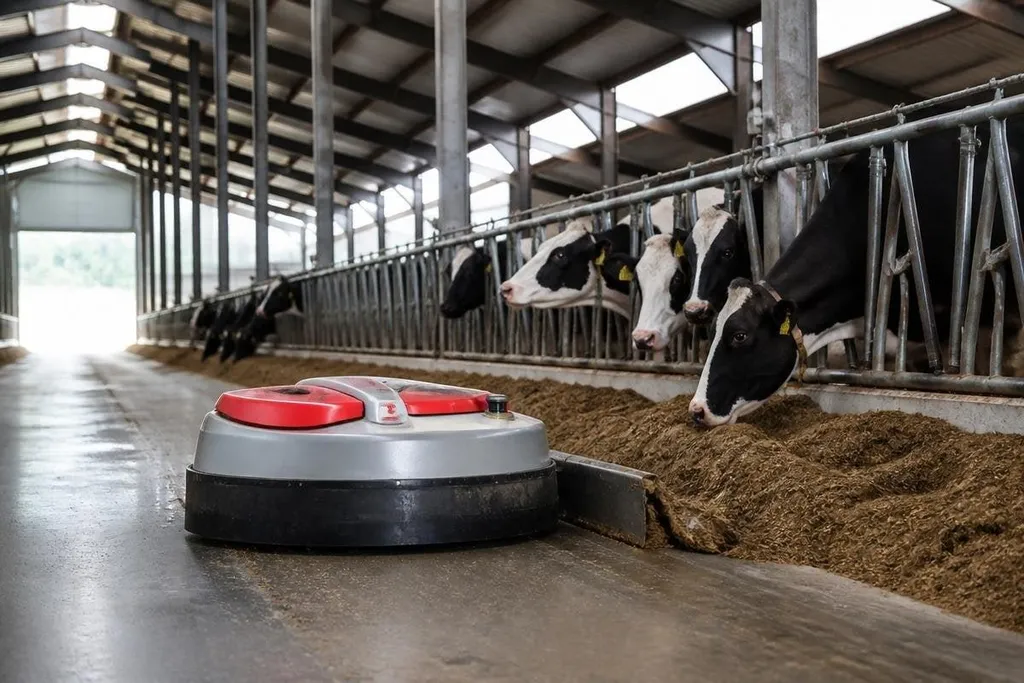
A livestock robot can check animals, move feed, clean floors, or manage milking without waiting for a person to start each task. The useful question for a farm manager is where that repeat work costs the most time, and whether a robot can do it safely around animals.
Quick read
- Robots help with feeding, milking, cleaning, and animal checks.
- Sensors turn movement, eating, and milk data into daily farm decisions.
- A robot still needs safe buildings, service, and a person who can act on its alerts.
The jobs robots can repeat
Livestock farms run on tasks that happen at set times or follow the same path. Feeding systems can move feed to animals, while robotic milking systems let cows enter a milking station when they are ready. Cleaning robots can push manure away from walking areas and return to a charging point.
That repeat work matters because missed jobs affect animal care and farm output. A feeding robot can follow a planned route, while a milking system can record which cow entered, how much milk she gave, and whether the process stopped early.
The robot does not make the farm plan. It follows one. A person still sets feed times, checks animal groups, and changes the plan when weather, health, or building conditions shift.
Sensors turn activity into farm data
Many livestock robots use cameras, weight sensors, tags, or other tools to identify animals and record movement. A collar or leg tag can link an animal to events such as feeding, resting, or entry into a milking station.
That record can help a worker spot a change sooner. A cow that eats less, walks less, or visits the milking station less often may need a closer check. The sensor does not diagnose the animal on its own. It points to a change that a trained person must assess.
A livestock robot’s value depends on the work it still leaves for farm staff. A buyer needs the machine’s task, price, service needs, and failure points before comparing it with manual labor or another system. Livestock robotics coverage can place those facts beside the farm building, power supply, and layout that set the machine’s limits.
The building sets the limit
A robot works within the farm layout it receives. Narrow routes, wet floors, poor lighting, loose objects, and animals blocking a path can stop a system or slow it down.
A farm may need new gates, charging points, floor changes, network access, or service space before the machine can run well.
Safety needs careful planning. The robot must move at a safe speed near animals and workers, stop when a person enters its path, and give clear warning when it has a fault. The farm also needs a manual way to feed, clean, milk, or check animals if the robot stops.
Data raises another practical issue. A system may record animal activity, equipment faults, and staff actions. Before buying, ask who stores that data, who can access it, and how the farm can use it if the supplier changes its software or service terms.
What the farm still needs to do
Automation changes the shape of work rather than removing farm work. A person may spend less time pushing feed or checking routine machine status, then spend more time handling alerts, inspecting animals, and fixing faults.
Service can decide whether the machine earns its place. Ask how often parts need replacing, how fast a technician can arrive, and which tasks staff can fix without outside help. A robot that stops during a busy feeding or milking period can create more work than it removes.
I'd treat a livestock robot as a farm system, not a stand-alone machine. Its value depends on the building, the staff, the animals, and the backup plan around it.
A buying checklist for farm managers
Use these checks before comparing models or signing a supply contract:
- Name the job: Record the task, its daily schedule, and the staff time it uses.
- Watch the route: Check doors, slopes, floor surfaces, animal flow, and charging space.
- Test the alert: Ask what the system reports when an animal blocks it, a sensor fails, or power drops.
- Plan the backup: Write down how staff will feed, clean, milk, or inspect animals during downtime.
- Check the service terms: Confirm parts, response times, software access, training, and repair costs.
- Set a review date: Compare labor time, animal checks, faults, and maintenance after the first operating period.
The next useful step is a small site review: map one repeat job, record where it fails today, and check whether a robot can do that work without making animal care harder.